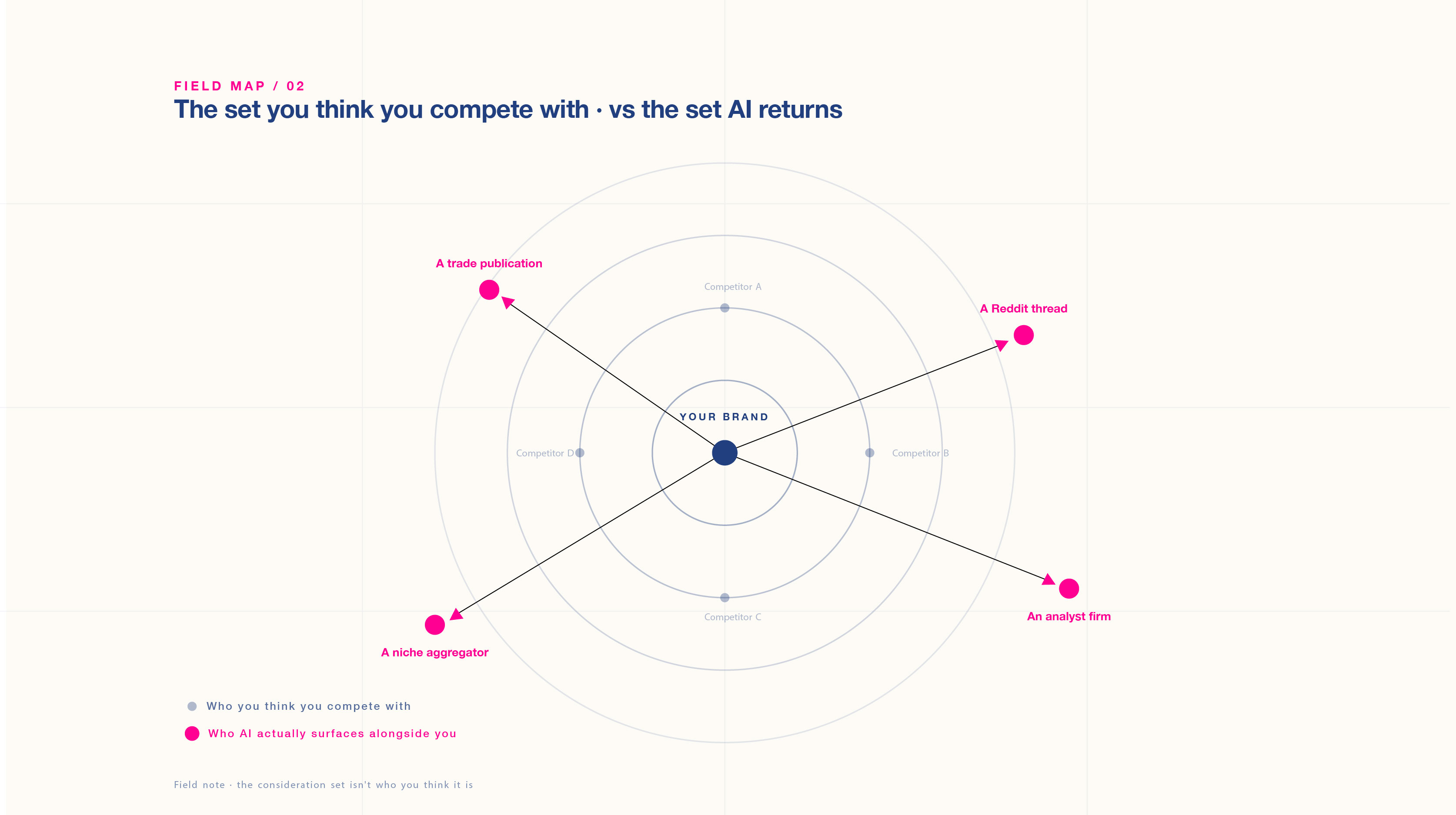
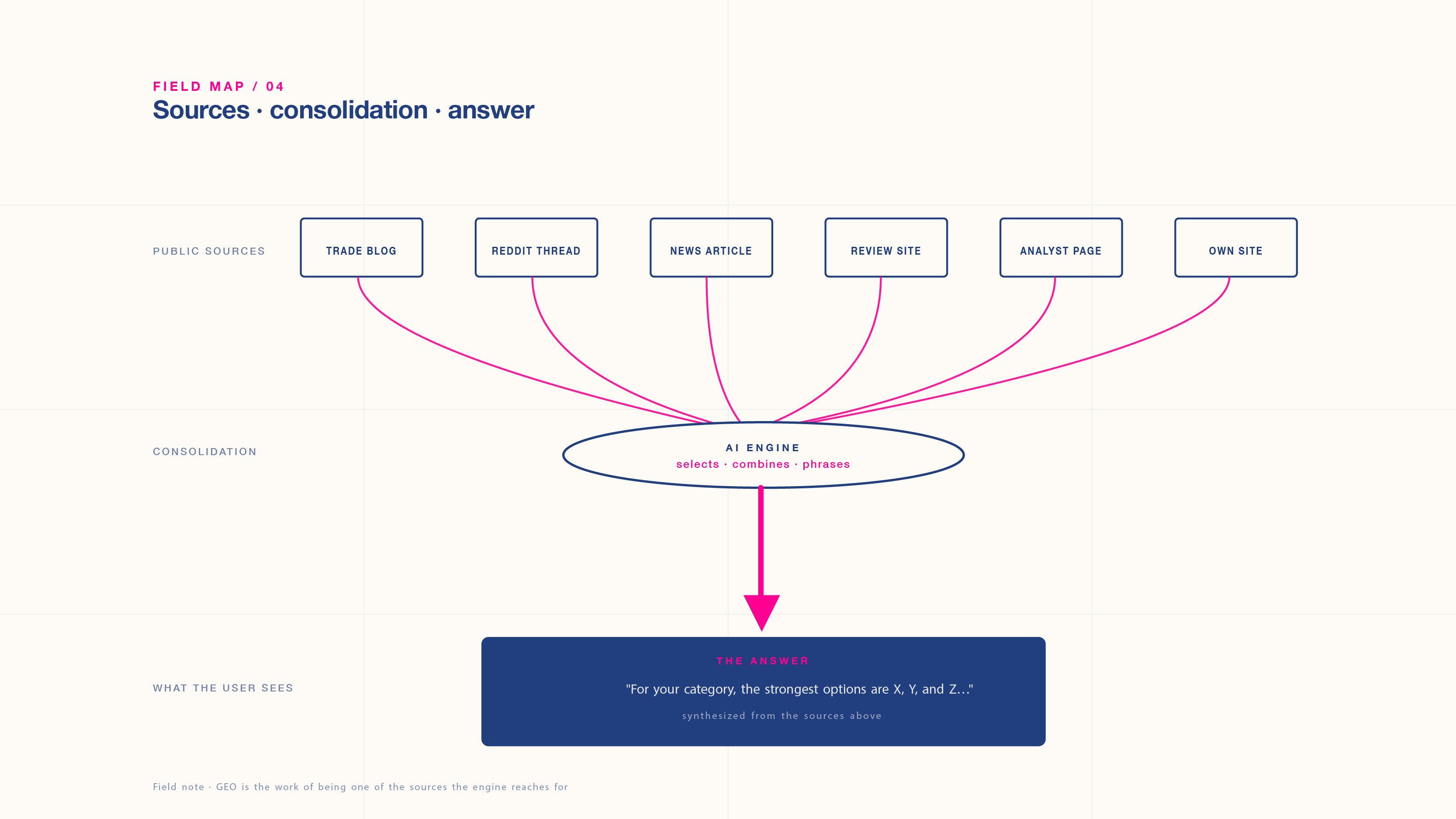
Most companies define competitors as businesses offering similar products or services. That logic works in traditional markets, but it starts to break in generative search. In AI-generated answers, your competitors are not just companies. They are the sources that shape the answer.
Why competitors in AI search are not only companies
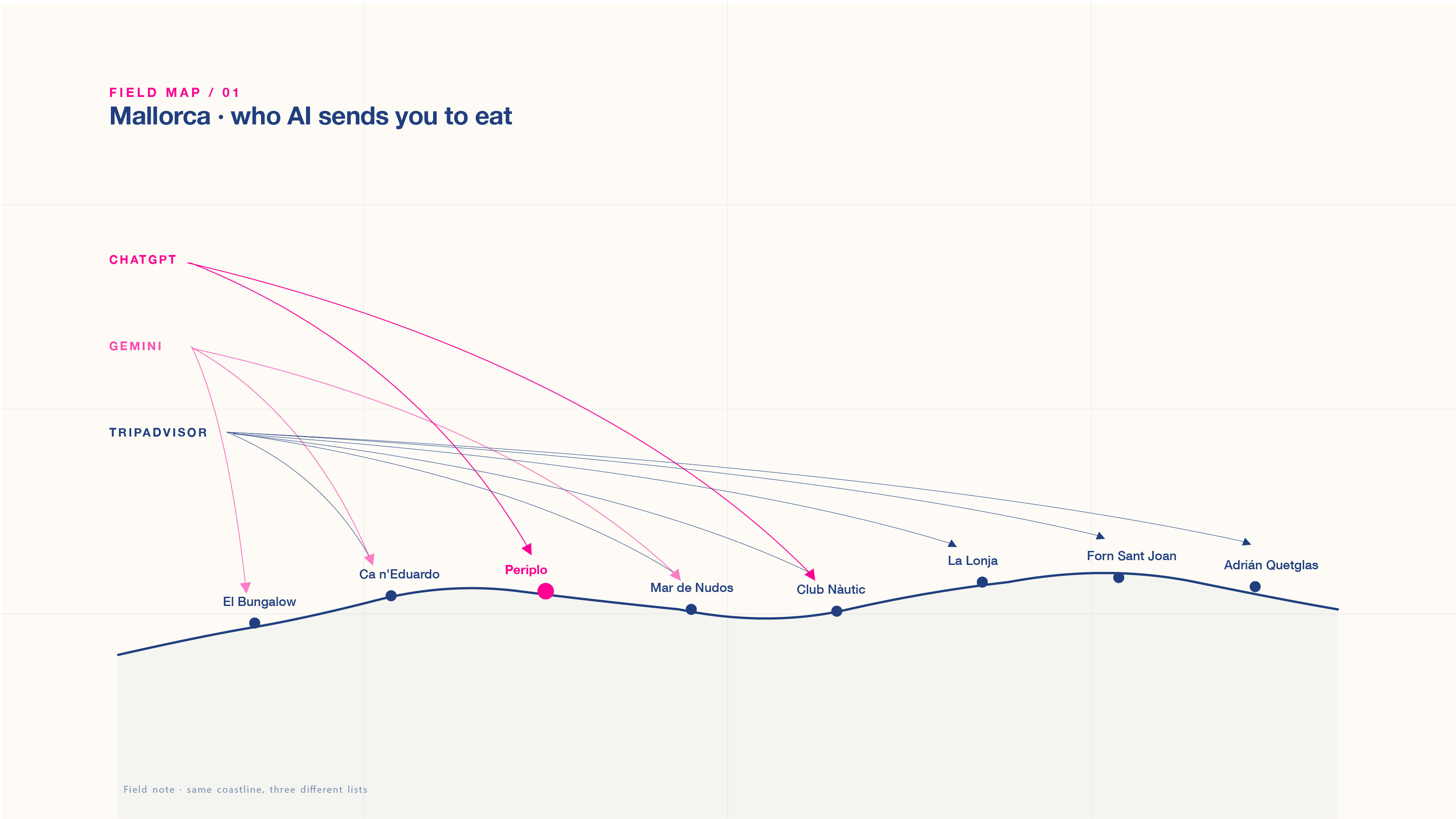
When a user asks a question, generative engines don’t compare brands directly. They build responses by combining information from different places.
These places are often editorial websites, blogs, forums, documentation pages, or aggregators. In many cases, these sources influence the answer more than the brands themselves.
This changes the nature of competition. You are no longer only competing with companies in your category. You are competing with any source that explains your topic clearly and appears frequently.
How certain sources become dominant
Over time, generative systems tend to reuse the same sources. If a domain shows up consistently across different answers, it gains influence and becomes a reference point.
As a result, a small group of sources often shapes a large portion of answers, while other content remains unused. This creates a concentration of visibility that is not always obvious from traditional SEO metrics.
What this means for your visibility
Publishing on your own site is not enough. Even strong content can remain invisible if it is not part of the sources that generative engines rely on.
The more relevant question becomes where your topic is being defined and whether your brand appears in those environments. Visibility depends on being present in the right places, not just having the right content.
Rethinking competition in GEO
In GEO, competition is less about who sells the same product and more about who shapes the answer.
Once you start looking at which sources are reused and where your brand appears, the strategy changes. You move from optimizing pages to positioning your presence within a system of sources.
From understanding sources to acting on them
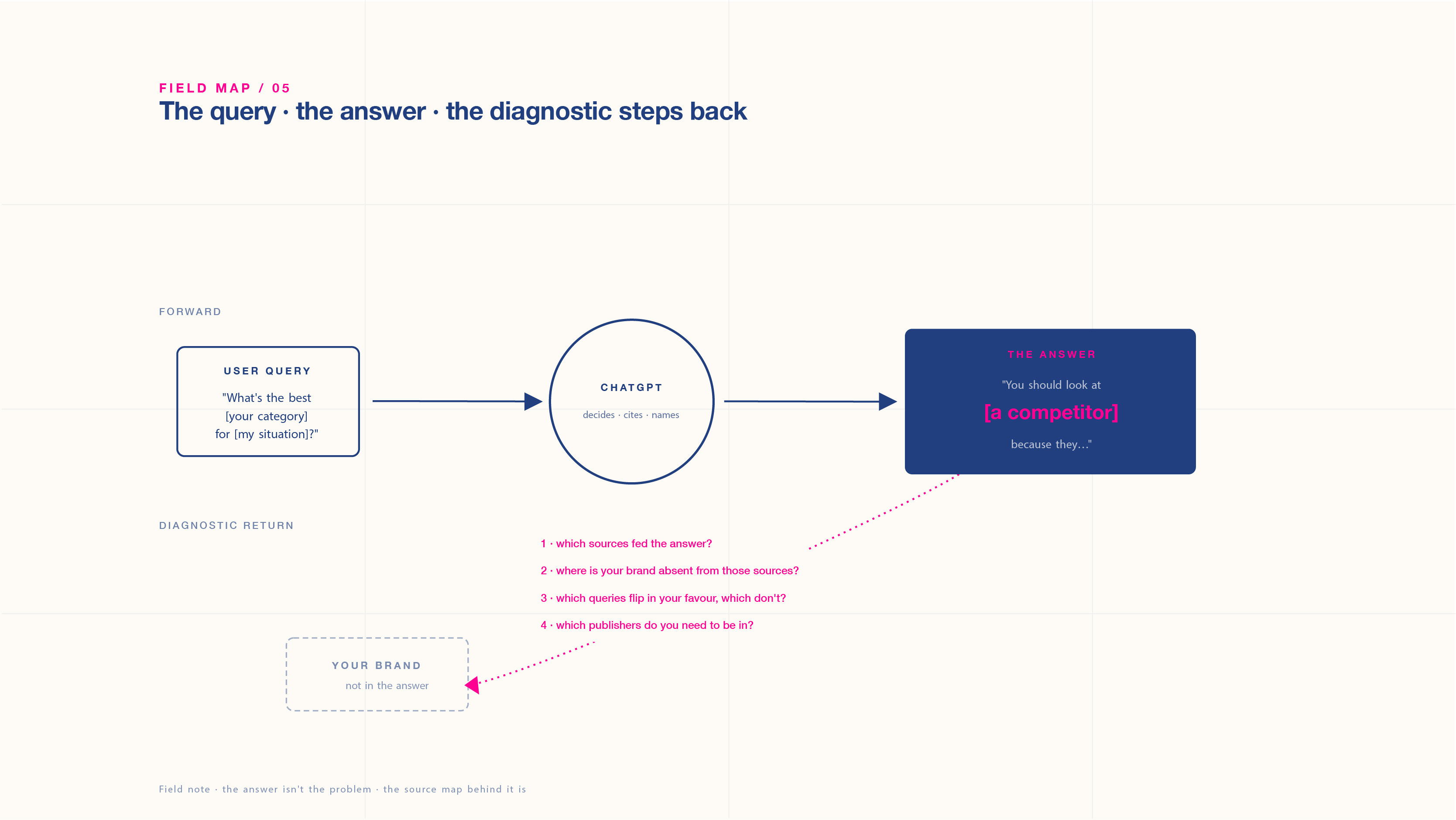
Once you identify which sources are shaping answers, the next step is measuring your presence across them.
The step after that is acting on it: closing gaps, strengthening your position, and becoming part of the sources that define the answer.
That’s exactly what a GEO assessment tool is designed to support.